Rental Operations
What maintenance actually costs
The rules of thumb are rough, the real number depends on the building, and underestimating it is the most common reason a deal underperforms.
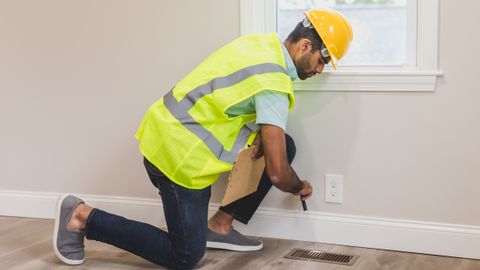
Maintenance is where projected returns go to die, mostly because it is estimated with a percentage rather than by looking at the building.
The rules of thumb, and their limits
Several circulate. The one percent rule, which allocates one percent of property value annually. The fifty percent rule, which assumes operating expenses consume half of gross rent. The per-square-foot approach, which allocates a dollar or two annually per square foot.
All of them are starting points. All of them are wrong for any specific property, sometimes by a factor of two.
They fail because they take no account of the building's age, its construction, its systems, its climate, or what has been deferred.
The two categories that get confused
Maintenance and repairs are ongoing: a leaking faucet, a service call, a broken appliance, painting between tenancies, landscaping. Recurring, relatively predictable, expensed for tax purposes in most cases.
Capital expenditure is replacement of major components: roof, HVAC, water heater, windows, siding, plumbing and electrical systems, parking surfaces, appliances. Infrequent, large, and depreciated rather than expensed.
Investors routinely budget for the first and not the second, which is why a property that runs smoothly for four years suddenly consumes two years of cash flow in one month.
How to estimate capital properly
Inventory the major systems, estimate the remaining useful life of each, estimate replacement cost, and divide.
Typical service lives, which vary considerably by material, climate and installation quality: asphalt shingle roofing fifteen to thirty years; HVAC equipment fifteen to twenty; water heaters eight to fifteen; appliances ten to fifteen; interior paint three to five between tenancies; flooring five to fifteen depending on material; exterior paint seven to ten; water and sewer lines several decades but catastrophic when they fail.
Take a modest single-family rental. Roof $12,000 over twenty years is $600 a year. HVAC $8,000 over eighteen is $445. Water heater $1,800 over twelve is $150. Appliances $3,500 over twelve is $290. Flooring $6,000 over ten is $600. Paint and turnover items, $500 a year. Exterior paint $6,000 over nine is $667.
That is roughly $3,250 a year in capital reserve alone, before a single repair call — and it excludes windows, siding, plumbing, electrical, driveway and everything else.
On a property renting for $1,800 a month, that is fifteen percent of gross rent going to capital, permanently.
Most pro formas show three to five percent.
What drives the number up
Age. The dominant factor. A building from the 1920s has different failure modes and costs than one from 2015.
Deferred maintenance at purchase. A discount for condition is not free money. It is a bill with a later due date, and the bill is usually larger than the discount.
Climate. Freeze-thaw cycles, humidity, coastal salt, extreme heat and wildfire exposure all shorten service lives.
Tenant profile and turnover. Higher turnover means more frequent paint, flooring and cleaning.
Quality of prior work. Cheap repairs fail early. A building that has been maintained badly costs more than one that has been maintained well, regardless of age.
The reserve mechanics that work
Money in a spreadsheet is not a reserve. Move it.
A separate account, funded monthly by transfer, treated as untouchable for anything except capital work.
The psychological function matters as much as the financial one. Cash sitting in an operating account gets spent, and the roof arrives anyway.
Reducing the cost without deferring it
Preventive service. Annual HVAC service, gutter cleaning, roof inspection, plumbing checks. Cheap, and it extends service lives materially.
Durable specification. In rentals, the cheapest fixture is rarely the cheapest over ten years. Luxury vinyl plank rather than carpet, quality faucets, solid-core doors — the payback is in turnover cycles.
Consistent materials across a portfolio. Same paint color, same fixtures, same flooring. Simplifies purchasing, repairs and turnover, and lets you buy in volume.
Responsive repair. A small leak fixed promptly is a service call. Ignored, it becomes framing, drywall and mold remediation.
Reliable trades. The relationship is the asset. A plumber who answers on a Sunday is worth paying more per hour than one who does not.
Underwriting it honestly
The test is straightforward. Would the deal still work if maintenance and capital together consumed fifteen percent of gross rent on a newer property, or twenty-five on an older one?
If it only works at five percent, it does not work. You have simply not paid for it yet.
General information about rental operations, not investment or tax advice. Costs vary widely by property, region and condition. Obtain professional inspections and estimates for specific properties.
Also by Rosa Delgado
- What we would tell someone starting todayStrategies
- Bookkeeping systems that survive an audit and a decadeTax & Structure
- The annual review every landlord should doRental Operations
- The first deal: a realistic sequenceStrategies