Markets & Cycles
Supply, not demand, is what usually moves a market
Population growth gets the headlines, and permit data tells you more about where rents are going.
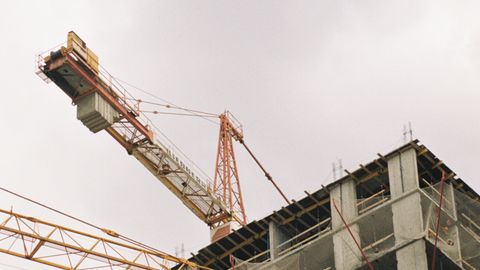
The standard market pitch leads with population growth, job growth and migration. All demand-side.
Rents and prices are set by the relationship between demand and supply, and supply is the side that moves faster, is more measurable, and is more frequently ignored.
Why supply is the more useful signal
Demand changes gradually. Population and employment shift over years, and the trend is usually visible well in advance.
Supply changes in steps. A metro absorbing steady demand for a decade can receive several years of construction deliveries in eighteen months, and rents flatten or fall despite unchanged demand.
This is the pattern behind most of the rent softness in high-growth Sun Belt markets in recent years. Demand remained strong. Deliveries arrived in volume, having been permitted and financed years earlier under different conditions, and concessions followed.
The data worth watching
Building permits, published by the Census Bureau at metro level, monthly. The earliest reliable indicator, leading deliveries by roughly one to three years for multifamily.
Units under construction, which tells you what is committed and cannot be stopped.
Deliveries, which is when the supply actually competes with you.
Absorption, the rate at which new units lease, which tells you whether demand is keeping pace.
The ratio that matters is deliveries relative to existing stock. A metro adding three percent to its inventory in a year is going to see concessions. One adding half a percent is not.
The lag that creates the cycle
Real estate development is slow and this is the entire mechanism of the cycle.
Rents rise. Development becomes attractive. Land is acquired, entitlements pursued, financing arranged, construction begun. Two to four years later, the units deliver.
By then, the conditions that justified the project may have reversed — and the project delivers anyway, because it is far cheaper to finish than to abandon.
The result is chronic over- and under-shooting. Supply arrives when it is least needed and is absent when it is most needed.
Anyone underwriting a hold period should be looking at what is under construction now, because that is what will compete with them in year two and three.
The constraint side
Supply response varies enormously by market, and the difference is mostly regulatory and geographic.
Elastic markets — much of Texas, the Southeast, the Mountain West — have available land, faster entitlement and fewer restrictions. Supply responds quickly to price signals, which limits both rent growth and price appreciation over time.
Inelastic markets — coastal California, the Northeast, parts of the Pacific Northwest — have geographic limits, restrictive zoning, lengthy entitlement and organized opposition. Supply responds slowly, so demand shows up in price rather than in construction.
This is why the two categories behave differently through cycles. Elastic markets show more volume volatility and less price volatility. Inelastic markets show the opposite.
Neither is better. They are different risk profiles, and they should be underwritten differently.
What to actually do with this
Before buying, find out what is permitted and under construction within a reasonable radius, and as a percentage of the existing stock in the relevant segment.
Permit data is public. Local planning departments publish pending applications. Many metros have online permit portals.
Then ask what happens to your rent assumptions if that supply delivers on schedule.
A deal underwritten to three percent annual rent growth, in a submarket about to add five percent to its inventory, is underwritten on a forecast that contradicts the visible facts.
The segment distinction
Supply is segment-specific, and this matters.
New multifamily deliveries are overwhelmingly at the higher end of the market, because construction costs are what they are. That directly pressures Class A rents and pressures Class B and C only indirectly, through the concessions that pull renters upward.
Similarly, single-family construction competes with existing single-family, not with small multifamily.
Look at the supply that competes with your specific product in your specific submarket, not at the metro headline.
The general point
Demand-side narratives are compelling, widely repeated and slow-moving, which means they are usually already priced.
Supply is measurable, forward-looking and public, and it is the variable most likely to make a well-located property underperform for three years.
Look it up before you buy.
General information about real estate markets, not investment advice. Market conditions vary and past patterns do not predict future outcomes. Consult qualified professionals about your own circumstances.
Also by Nikhil Varma
- Selling: timing, costs and the tax billTax & Structure
- Demographics and the next twenty years of housing demandMarkets & Cycles
- Passive activity losses and why the tax benefit may not apply to youTax & Structure
- Is now a good time to buy?Markets & Cycles