Strategies
House hacking, honestly assessed
Living in the property you rent out is the most accessible entry point in real estate, and it involves trade-offs nobody mentions in the enthusiastic version.
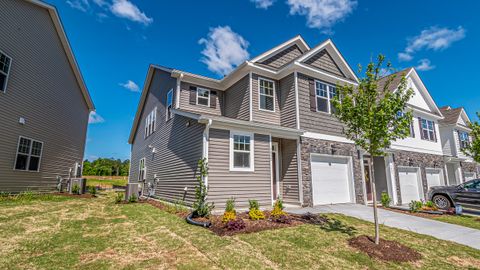
House hacking means buying a property, living in part of it, and renting the rest. A duplex where you occupy one unit, a house with a rented basement apartment, or a home with rented rooms.
The financial logic is strong enough that it is genuinely the best available entry for many people. It is also a lifestyle decision presented as a purely financial one.
Why the economics work so well
Owner-occupied financing. The central advantage.
Loans on owner-occupied property carry lower rates, lower down payments and easier qualification than investment property loans. Certain government-backed programs permit very low down payments on properties of up to four units, provided the buyer occupies one.
That is access to a multi-unit investment property at a fraction of the capital an investor purchase would require.
Reduced or eliminated housing cost. The rental income offsets the mortgage. Depending on the property, the owner's net housing cost can approach zero.
Housing is most households' largest expense. Removing it accelerates saving dramatically.
Learning the business at low stakes, with the property under your direct observation.
Tax treatment, since the rented portion is treated as rental property with associated depreciation and expense deductions, allocated appropriately. The owner-occupied portion is not.
The allocation rules require care and a tax professional.
The trade-offs
You live at work. Tenants know where you are. Maintenance requests arrive at the door. There is no separation between your home and your rental business.
People underestimate how much this matters until they experience a difficult tenant living on the other side of a wall.
Enforcement is harder. Raising rent, enforcing lease terms and addressing late payment are all more difficult with someone you see daily and whose situation you know.
This is the most commonly reported difficulty and it is a real cost, both financial and personal.
Reduced privacy, particularly with shared entrances, laundry, or in a room-rental arrangement.
Property type constraints. The properties that work as house hacks are not always the ones you would choose to live in, and the location choice is driven by rental economics rather than personal preference.
Occupancy requirements. Owner-occupied loan programs require you to live in the property for a defined period, commonly at least a year. Misrepresenting occupancy intent is mortgage fraud, which is worth stating plainly.
The variants
Small multifamily, two to four units. The cleanest version. Separate units, separate entrances, real privacy, and eligibility for residential financing.
The main constraint is availability and price, since these properties are sought after in most markets.
Single-family with an accessory dwelling unit — a basement apartment, garage conversion or separate structure.
Good separation where the unit is genuinely separate. Verify that the unit is legal and permitted, because unpermitted units are common, and they create insurance, financing and enforcement risk.
Renting rooms. The highest income relative to property cost and by far the lowest privacy.
Works best for people at particular life stages and becomes untenable for most as circumstances change.
Note also that room rentals may fall under different legal treatment than self-contained units, including different eviction procedures.
The underwriting
Run it as an investment, not as a housing decision with a benefit attached.
Would this property work as a pure rental if you moved out? That is the test, because eventually you will.
Include all the normal expenses — vacancy, maintenance, capital reserves, management at market rate — allocated to the rented portion.
Be realistic about the rent for the units, verified against comparable listings rather than assumed.
And model what happens when you move out and the whole property is rented at market. If it works then, the strategy has a clean exit.
The exit
The standard sequence is to occupy for the required period, then move out and rent the whole property, then repeat with a new owner-occupied purchase.
This is the mechanism by which people assemble a small portfolio without large capital, and it works, over years rather than months.
Check the occupancy requirements of your specific loan program before planning around it, since they vary.
Who it suits
People early in their careers, without children or with flexible arrangements, in markets where suitable properties exist at accessible prices, who are willing to trade privacy for a substantially accelerated financial position.
It suits fewer people than the enthusiastic version suggests, and for those it suits, it is difficult to beat.
General information about real estate strategy, not investment, tax or legal advice. Loan occupancy requirements and local rental regulations vary. Consult qualified professionals about your own circumstances.
Also by Rosa Delgado
- What we would tell someone starting todayStrategies
- Bookkeeping systems that survive an audit and a decadeTax & Structure
- The annual review every landlord should doRental Operations
- The first deal: a realistic sequenceStrategies